
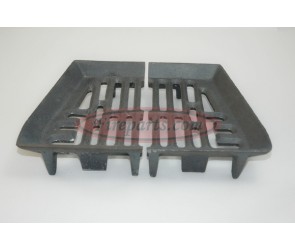
The Ultimate Guide to Replacement Fire Grates for Stoves and Open Fires.
Your fire grate serves as the hardworking foundation of your entire heating appliance. Over time, the intense thermal stress of burning wood and coal causes even the toughest cast iron to warp, crack, or burn out.
Replacing a damaged fire grate restores optimal airflow, boosts heat output, and protects your stove body from expensive damage.
What Does a Fire Grate Do?
A fire grate lifts fuel off the floor of the firebox or fireplace hearth to perform three critical functions:
- Feeds Oxygen: Elevating the logs or coal allows primary combustion air to flow directly underneath the fire, creating a hotter, cleaner, and more efficient burn.
- Clears Ash Accumulation: Slits or gaps in the grate allow spent ash to drop cleanly into the ashpan below, preventing the fuel bed from choking.
- Protects the Appliance: By elevating the core heat, the grate prevents warping on the base of your steel or cast-iron stove body.
Types of Replacement Fire Grate
Choosing the correct style ensures your appliance operates safely and burns fuel at peak efficiency.
1. Solid Cast Iron Fire Grates
- Best For: Traditional wood burners and open coal fires.
- Design: A single, heavy-duty piece of cast iron featuring stationary air slots.
- Benefit: Extreme durability and high resistance to warping under intense, prolonged heat.
2. Tapered Fire Grates (Bottom Grates)
- Best For: Inset open fireplaces and traditional fireback baskets.
- Design: Features a distinct tapered shape—wider at the front and narrower at the back—to mirror the contours of standard firebrick openings.
- Benefit: Maximises the burning surface area inside standard domestic fireplaces.
3. Riddling Grates & Grate Bars
- Best For: Dedicated multi-fuel stoves.
- Design: Uses an interconnected system of individual moving bars linked to an external riddling arm, or a central circular rotating grate.
- Benefit: Allows you to clear away ash mechanically without opening the stove door and letting heat escape.
How to Measure a Replacement Fire Grate
Step 1: Remove the Old Grate and clear out all remaining ash from the stove. Pull the old casting out carefully.
Step 2: Measure the Maximum Width of the grate. Find the distance across the widest point. Typically, this is the front edge.
Step 3: Measure the Back Width. Check if your stove grate tapers inward. If it does, record the narrower rear edge.
Step 4: Measure the Total Depth. Determine the size from front to back. Place your tape measure in a straight line between both edges.
Step 5: Check the Part Number. Turn the old metal over to inspect the bottom. Manufacturers often stamp a specific product code directly into the casting.
IMPORTANT : If you have a BAXI Grate you need to measure the opening of the fire and order the grate according to the size of the opening and NOT the width of the grate! The grate for a 16″ Baxi Fire does NOT measure 16″ it measures around 13″. Always double check and cross reference ALL dimensions.
Find Your Perfect Replacement Grate
Using high-quality cast iron replacements prevents premature cracking and keeps your home heating system running smoothly all winter long.
Explore the extensive collection of premium cast iron, tapered, and brand-specific replacement grates at Fireparts to restore your appliance’s heating efficiency today.